Have you ever paused mid-conversation when someone said, “I can draw you into the story” or “It ended in a draw”? The word draw might seem simple, but it carries a surprising variety of meanings depending on how it’s used.
From art to competitions, and even everyday expressions, understanding the draw meaning can open doors to clearer communication and richer storytelling.
At its core, draw is more than just putting pencil to paper.
It can describe attracting attention, creating balance, or ending something evenly.
Knowing how to use it properly doesn’t just make your language sound smarter—it helps you connect ideas, emotions, and people.
By exploring its origins, uses, and cultural impact, we’ll uncover why this seemingly ordinary word is actually quite powerful.
Whether you’re a writer, student, or simply curious about language, this guide will make the draw meaning crystal clear and give you practical ways to use it every day.
What Does Draw Mean?
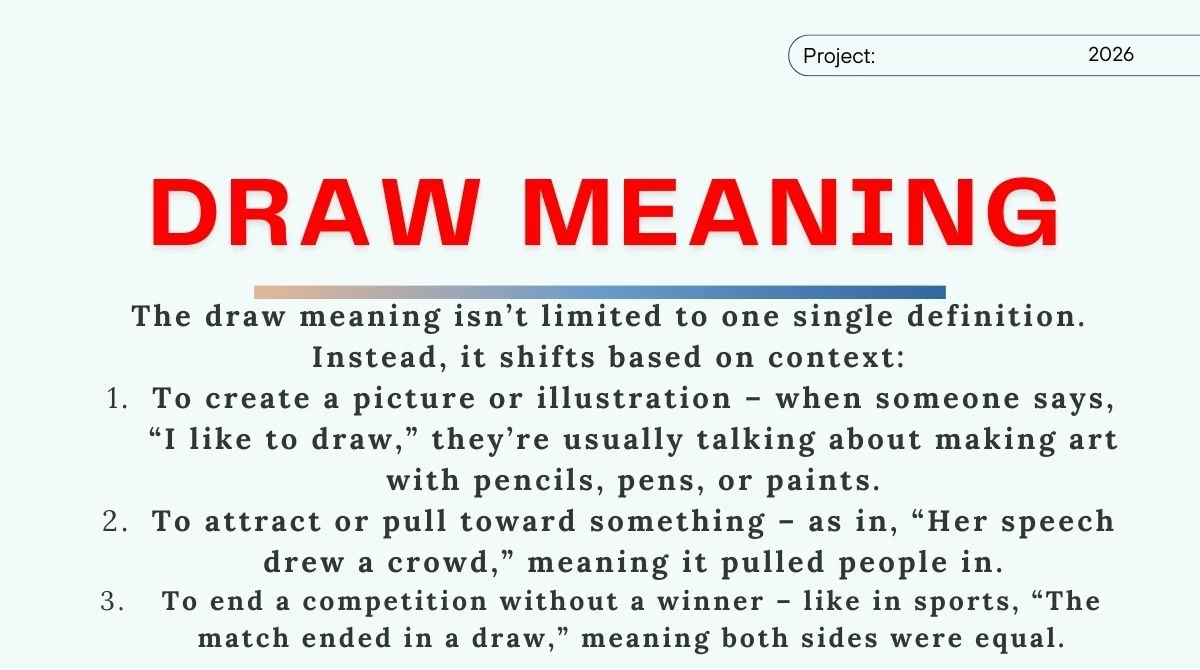
The draw meaning isn’t limited to one single definition. Instead, it shifts based on context:
- To create a picture or illustration – when someone says, “I like to draw,” they’re usually talking about making art with pencils, pens, or paints.
- To attract or pull toward something – as in, “Her speech drew a crowd,” meaning it pulled people in.
- To end a competition without a winner – like in sports, “The match ended in a draw,” meaning both sides were equal.
Real-Life Examples:
- A child draws a smiley face on a notebook.
- A popular influencer draws attention wherever they go.
- Two soccer teams draw after an intense 90-minute game.
Understanding the draw meaning in each context can prevent confusion and enrich your communication.
Origin and Background of the Term
The word draw has roots that go far back in history. It comes from the Old English word dragan, meaning to pull or drag. Originally, it wasn’t about art at all—it was about physically pulling something, like a sword from its sheath.
Over centuries, its usage expanded. Artists began using it to describe pulling lines across paper, and later, sports and competitions borrowed the term to indicate a balanced outcome. Even today, the concept of drawing attention or pulling people in remains central.
Imagine medieval fairs where storytellers drew crowds with tales of knights and dragons. That same essence exists today in social media and marketing campaigns—drawing people in is timeless.
How Draw Is Used in Daily Life
The beauty of draw is its versatility. Here are some practical ways it appears:
- Art – Sketching, drawing portraits, or doodling in a journal.
- Sports – Describing matches that end evenly, like football or chess.
- Attraction – “The festival drew hundreds of visitors.”
- Random Selection – Pulling a name from a hat or a lottery draw.
- Emotional Pull – “Her kindness drew me in immediately.”
- Physical Action – Drawing water from a well or drawing a curtain.
Each usage carries its own flavor, yet all connect back to the original idea of pulling, creating, or attracting.
Emotional or Practical Meaning of Draw
Why does draw matter beyond words? Emotionally, it represents connection and balance. Think about a fair game ending in a draw—there’s equality, suspense, and shared excitement. When someone draws you in, it conveys influence, empathy, or curiosity.
Culturally, different societies use draw in unique ways: in literature, it can symbolize temptation or fascination; in sports, it represents fairness; in art, it’s a tool for self-expression. In daily life, understanding these nuances can make your interactions more thoughtful and intentional.
Similar or Related Terms
- Pull – Physical force, often more literal than “draw.”
- Sketch – More specific to visual art, usually rough outlines.
- Tie – In sports, a “tie” is similar to a draw.
- Attract – General term for pulling interest or attention.
- Draft – Can refer to a preliminary drawing or version of something.
Each word shares part of the meaning but carries subtle differences in context.
Common Misunderstandings About Draw
- Draw only means “to create art” – False. It also covers pulling, attracting, and balancing.
- Draw is formal language – Not always; it’s casual in sports or conversation.
- A draw is a negative outcome – Often it’s neutral or even positive, depending on context.
- Drawing always involves a pencil – It could be digital, symbolic, or figurative.
- Draw and pull are interchangeable – Sometimes yes, sometimes no, depending on subtle meaning.
Being aware of these misconceptions helps prevent miscommunication.
Examples of Draw in Sentences
- I love to draw landscapes in my sketchbook on weekends.
- The magician’s tricks drew gasps from the audience.
- Yesterday’s chess game ended in a draw.
- The festival drew visitors from all over the country.
- She drew her coat tighter against the cold wind.
- He quickly drew a diagram to explain his idea.
- The movie’s emotional plot drew everyone into the story.
- They decided to draw names for the team randomly.
Why Understanding Draw Matters Today
In modern life, language shapes perception, connection, and influence. Knowing the draw meaning equips you to:
- Express yourself clearly in conversation, writing, or presentations.
- Avoid misunderstandings in sports, art, or social contexts.
- Recognize subtle emotional cues, like being “drawn” to someone’s charm or story.
From marketing campaigns to classroom discussions, draw remains a powerful word that bridges communication, emotion, and action.
Frequently Asked Questions
What does draw mean in simple words?
Draw can mean to make a picture, attract attention, end evenly, or pull something toward you.
Is draw positive or negative?
It depends on context—it can be neutral (a tie game), positive (drawing interest), or simply descriptive (drawing art).
Where is draw commonly used?
In art, sports, everyday conversations, marketing, and even random selections like lotteries.
Is draw formal or informal?
It’s versatile—informal in conversation, but also formal in writing, competitions, and official announcements.
Why do people search for draw?
Because it’s a common word with multiple meanings, and people want to understand its nuances and applications in daily life.
Conclusion
The word draw may seem simple at first glance, but its power lies in its versatility.
From art to sports, from attracting attention to balancing outcomes, understanding the draw meaning helps you communicate with clarity, creativity, and emotional insight.
Embrace its richness, and you’ll find your words can truly draw people in, connect hearts, and capture moments in ways that last.
Remember: Every word you master is a tool to pull the world closer, just like the word draw.

Joseph Kumar is the pun-loving mind behind EnglishPuns.com, where wordplay meets wit in every line. He turns everyday English into a playground of laughter and clever twists.